
How do I set boundaries as a mom?
A boundary is a clear line that teaches the people in your life how you want to be treated. In motherhood they are a form of self-care, the way you protect your time, energy, and home, whether the pressure is coming from in-laws and family, your own kids, or your partner.
A life with no boundaries can feel chaotic and full of resentment, where you are at the mercy of others and give far more than you get back.

What it looks like
You feel the cost of a lack of boundaries long before you can name it.
You might be struggling with boundaries if you recognize yourself here, especially since having a baby, when in-laws, grandparents, and unsolicited advice arrive all at once.

Common questions

How do I set boundaries with my in-laws and a new baby?
Decide what matters most, then name it before the visits begin, not mid-conflict.
- Entitlement is rarely an attackIn-laws and grandparents often feel they have a right to access a new baby, and most of them are not trying to hurt you. They overstep in error, not realizing the impact, which is exactly why naming the boundary out loud helps rather than offends.
- Set the boundary in advanceA limit set in advance is far easier to hold than one improvised in a tense moment. Deciding your few non-negotiables around visits, advice, and time lets you lead with a plan instead of reacting from resentment.
- You do not owe an explanationYour choices about your own child are yours to make. You can name the limit without justifying it or reopening it for debate, which keeps a clear line from turning into a negotiation.



Isn’t setting boundaries selfish?
Setting boundaries is a form of self-care, not a way of pushing people away. They teach the people in your life what you will and will not tolerate, which is what lets a relationship feel safe for everyone in it. Naming a limit can feel uncomfortable at first, but it tends to feel far better than a life of quiet resentment.
Key terms
The language of boundaries
Naming what is happening takes some of its power away. These are the terms that make boundaries easier to see, hold, and talk about.
- What is a boundary?
- A clear line that teaches the people in your life how you want to be treated. It is not a wall that pushes people away, it is the information that lets a relationship feel safe for everyone in it.
- What are family and in-law boundaries?
- Limits that protect your home, your child, and your routines from being overridden by relatives and grandparents who feel entitled to access. With a new baby they often need to be named out loud for the first time, around visits, advice, and time.
- What are age-appropriate boundaries?
- Limits matched to what a child can actually understand and handle at their stage. They protect both your child and you, and they shift as your child grows.
- What is people-pleasing?
- The habit of saying yes to keep everyone else comfortable while your own needs go unmet. It is really code for a boundaryless life, and it tends to leave you resentful rather than generous.


What can I actually say in the moment?
A few go-to scripts let you hold a firm line without slipping back into explaining or defending.
- For unsolicited adviceTry “I can see how much you care, but my partner and I have decided…” It honors the relative’s good intention while making clear the decision is already made. You acknowledge the care without reopening the choice.
- For unannounced drop-insTry “If you’d like to come for a visit, please plan with me in advance.” It sets a structure around access to your home and your baby without rejecting the visit itself. Said once, calmly, it gives family a clear expectation to work with.
- For a specific behaviorTry “I know you’re trying to help, but when you do that it makes me feel… next time please…” Naming the impact and the request keeps it about the behavior, not the person. It is okay for your approach to be different from theirs.
How therapy helps
How therapy helps you set boundaries
Boundaries are a skill you can build, and they are hard to build alone when guilt and people-pleasing are doing the talking. Therapy gives you a place to figure out what you need and to practice asking for it.

Set healthy boundaries
Resentment can grow when needs go unspoken. Therapy helps you establish and communicate boundaries that work for both you and your partner.
Navigate family and in-laws
When grandparents and relatives overstep around your baby, therapy helps you decide your non-negotiables and find calm, clear language to hold them.
Unlearn people-pleasing
Many of us were raised to keep the peace at our own expense. Therapy helps you notice that pattern and choose differently, so saying no stops feeling like a betrayal.
Find the words
When a limit is hard to name, it often comes out as conflict instead. Therapy helps you find clear, kind language for what you need before resentment does the talking.
Hold the line with hard people
Some relationships push back. Therapy helps you stay grounded with boundary violators and decide what structure you need to feel safe and respected.
How do I set boundaries with my own kids?
Boundaries with your kids are limits matched to what they can actually handle at their age, held with warmth and consistency.
- Match the limit to their ageWhat a toddler can manage is different from what a ten-year-old can. Age-appropriate limits fit where your child actually is, which is what makes them hold.
- Kind and predictable at the same timeA limit with a child works when it is kind and predictable. You can hold the line and stay connected at the same time.
- They grow as your child doesThe limits that fit a toddler loosen as your child matures, so boundaries with kids are something you revisit, not set once.
Free tool
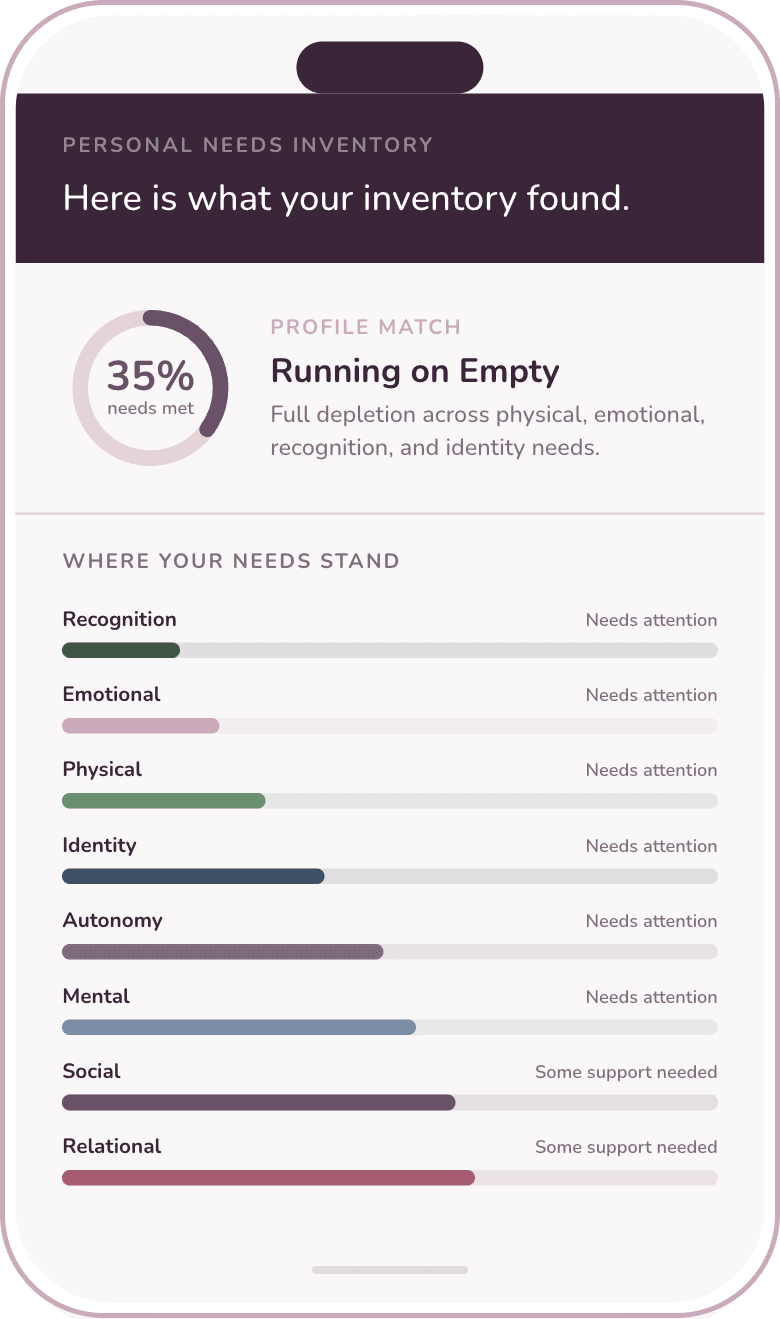
~5 minFreePersonal Needs Inventory
You already know something is off. The Personal Needs Inventory helps you get specific about what it is, across eight areas of your life, so you can finally see where to start.
You cannot protect a need you have not named, and most boundary struggles start with a need that has gone unspoken. This maps exactly which ones, so the next limit is easier to name out loud.
What if someone keeps ignoring my boundary?
Some people see the line and step over it anyway. With them, you hold it clearly and repeat it.
- Assert and repeatA boundary violator is someone who knows the line and crosses it regardless. With them, you will still assert the boundary clearly, and you may need to parrot it many times before it sticks.
- Add structure when words are not enoughWhen asserting it is not landing, you can change the conditions. Meeting a difficult relative in a public space, for example, tends to keep things on better behavior because other people are around.
- Holding it is not unkindReinforcing a limit with someone who keeps crossing it is not cruelty, it is self-protection. You are responding to what they have shown you, not punishing them for it.
Free tools and resources
Boundaries start with knowing what you actually need.



What clients say
Mom-centered, judgment-free care on your terms.
“I was struggling so much and feeling extremely overwhelmed as a new mother when I discovered Momwell. I thought I was the only one struggling and that there was something wrong with me for not being able to handle it all. After listening to the podcast, I’m feeling so much more like myself again! Motherhood is still hard, but I feel like I can finally breathe and enjoy it. Thank you, Erica!”
“I’d just gotten done crying after yelling at my children for the 100th time that day, feeling like I was a terrible mother, when I found the Mom Rage course. It was so comforting to hear people talking about exactly what I was going through–with NO judgment. I left with the tools I needed to recognize when I’m getting overwhelmed and bring myself back down. Our lives have gotten so much easier–I’m so grateful to Momwell!”